
Empathy has a reputation problem in the C-suite. Many executives still view it as something reserved for HR conversations or performance reviews gone soft. But the role of empathy in executive leadership is far more strategic than that perception allows. Empathy is what separates leaders who get compliance from those who get commitment. It shapes how teams make decisions under pressure, how organizations retain top talent, and whether culture is something people feel or just something printed on a wall. This article cuts through the noise and shows you exactly how empathy functions as a leadership discipline.
Table of Contents
Key takeaways
| Point | Details |
|---|---|
| Empathy is a discipline, not a trait | Cognitive, emotional, and behavioral empathy are skills you build deliberately, not qualities you either have or lack. |
| Empathy drives measurable performance | 70% of employees say empathetic leadership drives their motivation, directly affecting retention and output. |
| Accountability grows with empathy | Empathetic leaders hold people to higher standards because they understand the root cause behind performance gaps. |
| Blind spots shrink under empathy | Leaders who seek diverse perspectives through genuine listening make better decisions under pressure. |
| Empathy must be operationalized | Measuring culture health, leadership trust, and engagement alongside financial results is how empathy becomes a system. |
The role of empathy in executive leadership, defined
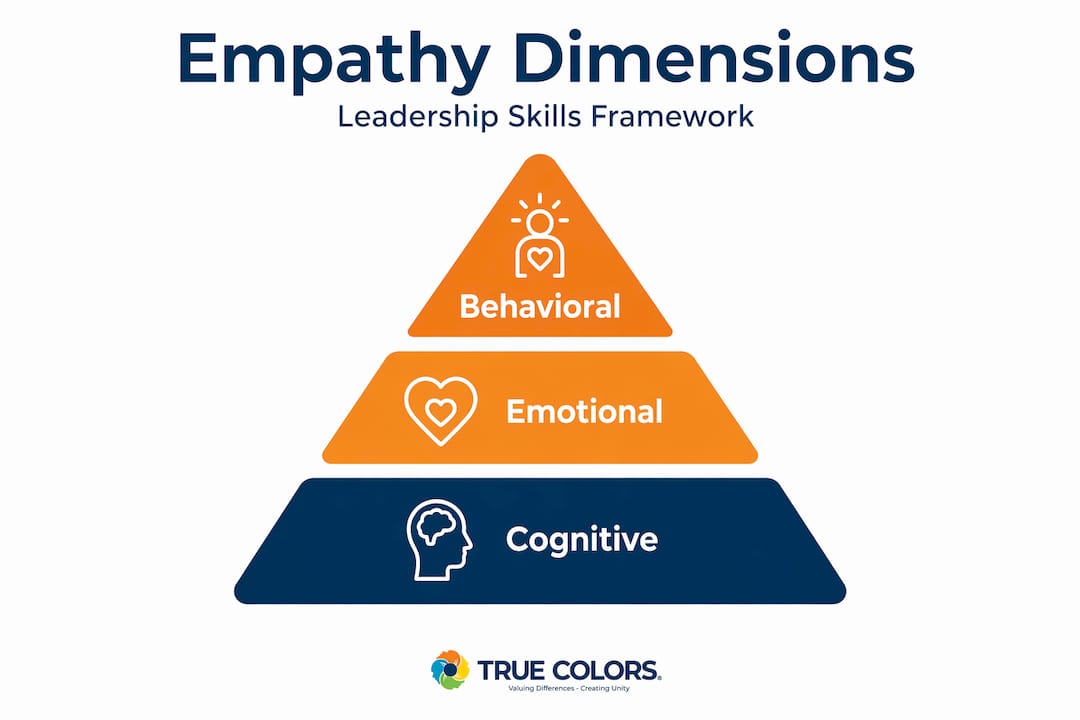
Most executives understand empathy as the ability to “put yourself in someone else’s shoes.” That definition is accurate but incomplete. For leaders, empathy operates across three distinct dimensions, each producing different results.
Cognitive empathy is the ability to understand how another person thinks. It does not require emotional agreement. It requires intellectual curiosity about another person’s reasoning. An executive who can accurately model how their team lead is processing a restructuring announcement will communicate that change far more effectively than one who cannot.
Emotional awareness is the ability to recognize what someone is feeling and acknowledge it without dismissing or fixing it. This is where many executives stall. The instinct to solve problems fast often overrides the capacity to simply register that someone is distressed or disengaged.
Behavioral response is where empathy becomes leadership. It is the observable action taken after understanding someone’s perspective and emotional state. This is the dimension that most directly affects trust, alignment, and execution.
| Empathy dimension | What it requires | Leadership outcome |
|---|---|---|
| Cognitive empathy | Understanding another’s perspective | Clearer communication and better decisions |
| Emotional awareness | Recognizing and acknowledging feelings | Higher trust and psychological safety |
| Behavioral response | Acting on what you’ve understood | Stronger alignment and follow-through |
The distinction that matters most: empathy is not agreeableness. You do not have to agree with someone to understand them. Empathetic leaders score higher in transformational, ethical, and servant leadership styles. That is not because they avoid hard conversations. It is because they are better equipped to have them.
Pro Tip: Treat empathy like any other leadership capability. Audit how often you actively seek to understand a team member’s perspective before responding. That frequency is your baseline.
How empathy shapes organizational performance
The business case for empathy is no longer theoretical. The data is specific and the financial stakes are real.

70% of employees report that empathetic leadership drives their motivation. That is not a soft metric. Motivated employees execute faster, innovate more reliably, and leave less often. When motivation drops, execution slows, and attrition rises. Organizations that lack genuine emotional support in leadership risk losing up to $180 billion per year in attrition costs. That number translates the importance of empathy for executives from a cultural preference into a financial imperative.
Beyond retention, empathy directly influences the speed and quality of execution. When team members trust that their leader understands their challenges, they surface problems earlier and escalate risks more honestly. That early signal reduces the cost of correcting course. The impact of empathy in leadership also includes reduced misalignment across departments, which means fewer cycles wasted on rework and interpersonal friction.
Here is what the research consistently shows empathetic leadership produces:
-
Higher employee motivation and discretionary effort
-
Stronger retention, especially among high performers
-
Reduced burnout and improved well-being, particularly during periods of uncertainty
-
Faster identification and resolution of performance gaps
-
A culture where dissent and belonging coexist, which is where real innovation lives
One underappreciated benefit is how empathy reduces the time leaders spend managing conflict. When people feel understood, they are less likely to passively disengage or actively create friction. The cultural dividend compounds over time. Organizations that build empathetic workplaces see measurable gains not just in engagement scores but in the quality of strategic conversation at every level.
Common myths that block empathetic leadership
The most persistent myth in executive circles is this: empathy and accountability cannot coexist. The belief goes that understanding someone too well will make you reluctant to hold them to a standard. That belief is wrong, and it is costing organizations real performance.
In practice, empathy is a tool for accountability. When you understand whether a performance gap is driven by burnout, skill mismatch, or misalignment in priorities, you can address the actual problem rather than just the symptom. Empathy as a leadership skill enables direct, specific conversations because you are working from a fuller picture of reality.
The second myth is that bold decision-making and emotional intelligence are mutually exclusive. The best leaders integrate both. Strategic clarity and human connection reinforce each other. A leader who can make a hard call and communicate it in a way that people understand and trust will execute that decision faster and with less resistance than one who simply announces and moves on.
A third, less-discussed barrier is structural. Executives often develop blind spots by relying too heavily on a single source of information or a single mode of perceiving a situation. Empathy corrects this by compelling leaders to actively seek perspectives they would otherwise miss. The executive who only hears from their direct reports in formal settings is operating with incomplete data, and that gap shows up in decisions.
Pro Tip: When you face a decision that affects people, deliberately identify whose perspective you have not heard. Not to delay the decision, but to stress-test it before you commit.
Consider how empathy works alongside self-awareness in leadership. Leaders who cannot recognize their own blind spots are the least likely to seek outside perspective. Empathy and self-awareness are not separate skills. They reinforce each other at the behavioral level.
Practical ways to embed empathy in your leadership
Understanding the case for empathy is one thing. Building it as a repeatable practice is another. The gap between knowing and doing is where most leadership development programs fall short.
Here is a numbered sequence for embedding empathy into how you lead day to day:
-
Schedule listening sessions without an agenda. Dedicate time each month to conversations with team members at different levels, where you are genuinely there to understand their experience, not to deliver information or solve problems.
-
Model vulnerability at the right moments. When you acknowledge uncertainty or admit a mistake, you give your team permission to do the same. That permission is what creates psychological safety. Without it, problems go unnoticed until they become expensive.
-
Design policies that reflect empathy. Flexibility in how and when people work, access to mental health resources, and clear standards for workload management signal that the organization understands people have lives outside of work. These are not perks. They are retention tools.
-
Create feedback loops that reward dissent. If every meeting ends with consensus, that is a warning sign. Build structures where disagreement is recognized, not just tolerated. Leaders who embed empathy as a system deliberately cultivate environments where pushback is valued.
-
Measure what you claim to value. High-performing executive teams track culture health, leadership trust, and engagement alongside financial results. If empathy only shows up in conversations and never in metrics, it will not stick.
| Empathy action | Observable outcome |
|---|---|
| Regular listening sessions | Earlier problem identification, stronger team trust |
| Vulnerability modeling | Higher psychological safety, more honest feedback |
| Empathetic policy design | Lower turnover, stronger sense of belonging |
| Structured dissent channels | Better decisions, reduced groupthink |
| Engagement and trust metrics | Accountability for culture alongside performance |
The integration of emotional intelligence in leadership is not a one-time initiative. It requires the same consistency and reinforcement that any other organizational capability demands. Culture is not what you say about it. It is what you repeat.
As AI takes on more analytical and operational work, the distinctly human capacity for empathy becomes the irreplaceable leadership advantage. Technology can optimize a process. It cannot build the trust that gets a team through a genuinely hard quarter.
My take: empathy is the hardest skill to fake
I have worked alongside executives at every level, and the ones who try to perform empathy without genuinely practicing it are usually the fastest to be found out. Teams have a finely tuned radar for the difference between a leader who asks how you are doing because they care and one who asks because they read it in a leadership playbook.
In my experience, the executives who most strongly resist empathy are often the ones who carry the greatest fear of being perceived as weak. What I have found is that the opposite is true. It takes considerably more courage to sit with someone’s discomfort, to acknowledge that a decision you made contributed to their burnout, or to genuinely change your position based on what a team member shared with you. That isn’t a weakness. That’s the work.
What I have learned from observing high-trust teams is this: empathy does not soften accountability. It sharpens it. When people believe their leader understands their situation, they are far more willing to accept honest feedback and rise to a difficult standard. The leaders I most respect are the ones who hold both simultaneously. They are clear on expectations and deeply aware of the human context behind performance. That combination is rare. And it is exactly what organizations need right now.
— Theresa Stairs
Build leadership that people feel

The principles in this article represent exactly the kind of leadership behavior that Truecolorsintl is built to help organizations develop and sustain. True Colors International works with executives and leadership teams to make empathy observable, measurable, and consistent across the organization. From Connected Leadership Training that builds the specific behaviors covered here, to corporate consulting solutions designed to operationalize culture change at scale, Truecolorsintl helps you turn what you believe about leadership into what your team actually experiences. Explore the full range of leadership development programs at True Colors International and find out where your leadership culture stands today.
FAQ
What is the role of empathy in executive leadership?
Empathy in executive leadership is the ability to understand team members’ perspectives and emotional states, then act on that understanding in ways that build trust, improve communication, and drive performance. It functions as both a decision-making tool and a culture-building discipline.
Does empathy undermine accountability for executives?
No. Empathy strengthens accountability by helping leaders understand the root cause of performance gaps, whether burnout, misalignment, or skill gaps, rather than addressing only surface-level symptoms. Leaders who combine empathy with accountability consistently outperform those who rely on authority alone.
How does empathy affect employee retention?
Organizations that lack genuine emotional support in leadership risk losing up to $180 billion annually in attrition costs. Empathetic leadership directly improves retention by creating cultures where people feel seen, supported, and motivated to stay.
Can empathy be developed as a leadership skill?
Yes. Empathy is not a fixed personality trait. It is a capability built through deliberate practice, including structured listening sessions, behavioral feedback, and systems that reward perspective-seeking. Truecolorsintl offers programs specifically designed to develop and reinforce this capability across leadership teams.
How do you measure empathy in an organization?
High-performing teams measure empathy through culture health scores, leadership trust indices, and employee engagement data tracked alongside financial metrics. When empathy is only discussed but never measured, it rarely sustains as a leadership norm.