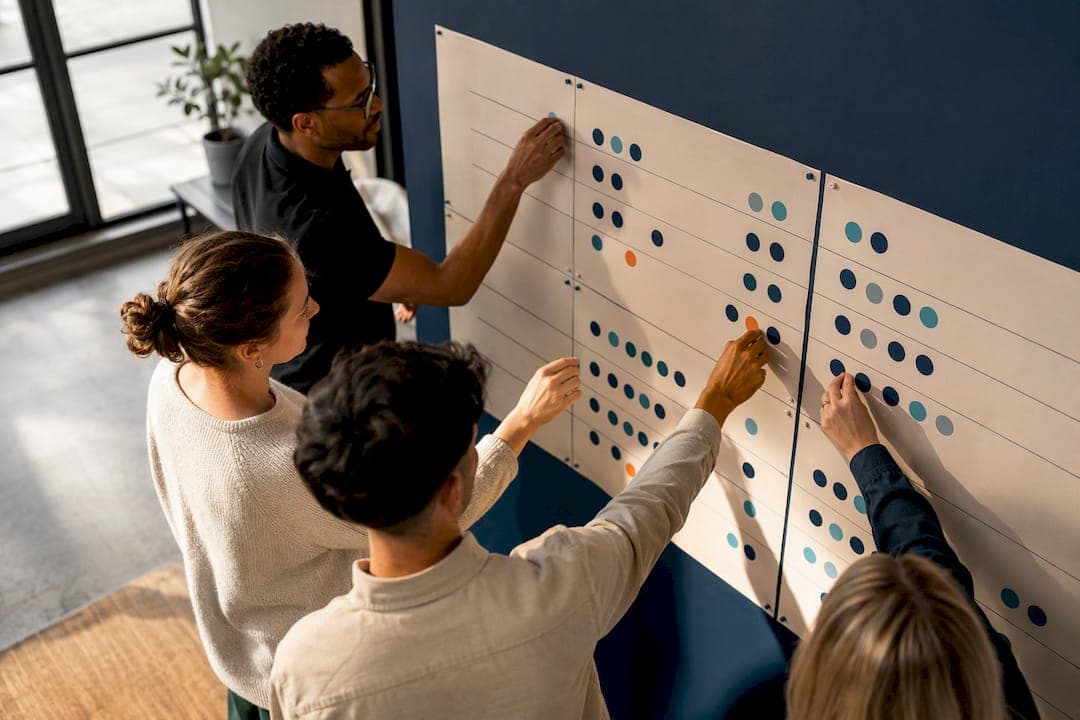
A team health check is a short, recurring self-assessment where team members anonymously rate the same set of dimensions, from psychological safety to workload, and then discuss the spread of answers together. Run well, it delivers exactly one thing managers actually need: clarity on which one or two problems to fix next, with a named owner and a due date attached.
TL;DR:
- Teams should focus on one to three key problem areas identified through spread analysis rather than trying to fix all issues at once.
- Using simple formats like traffic-light or Likert scales helps maintain quick response rates and clear discussions, especially in remote settings.
- Running health checks at aligned cadences—quarterly for stable teams, monthly during turnaround, or weekly in crises—ensures relevant, timely insights.
- Tracking the consistency of action completion rates and response rates over multiple cycles provides a better measure of real progress than scores alone.
- Addressing underlying trust or safety issues first, based on spread patterns rather than averages, leads to more effective and sustainable team improvements.
Table of Contents
- What Is a Team Health Check, and How Is It Different From a Retrospective?
- Core Dimensions and Sample Statements You Can Copy
- Traffic-Light, Likert, or Pulse: Which Template Format Fits?
- How Do You Run the Session Without Killing Honesty?
- Turning Scores Into a Plan: What the Spread Actually Tells You
- How Often Should You Run One, and What Should You Track?
- Why This Method Holds Up Under Scrutiny
- What Managers Get Wrong About Follow-Through
- Turn Your Team Health Check Into Lasting Culture Change
- Sources
What Is a Team Health Check, and How Is It Different From a Retrospective?
A team health check is a recurring, anonymous, dimension-based self-assessment. Team members rate the same handful of factors, such as trust, workload, and delivery confidence, on a simple scale, then the group reviews the results together. Unlike a one-off survey, it's built to repeat on a fixed schedule so leaders can watch trends instead of guessing at a single snapshot.
That repeatability is what separates it from a sprint retrospective. A retrospective looks backward at one specific stretch of work: what went well, what didn't, what to adjust next sprint. A health check looks at the underlying condition of the team itself, independent of any single project cycle. Many teams run both. The retrospective handles the tactical adjustments; the health check tracks whether the team's foundation, safety, alignment, workload, is getting stronger or weaker over time.
It also differs from an annual engagement survey run by HR. Engagement surveys are typically long, infrequent, benchmarked against other companies, and owned by a department the team rarely interacts with directly. A team health check is short, owned by the manager or the team itself, and designed to produce action within the same meeting where the data appears.
The typical output of a well-run check includes:
- A score per dimension, usually on a simple numeric or color scale
- The spread of answers within each dimension, not just the average
- One or two specific, owned improvements the team commits to before the next cycle
That last point matters more than the scores themselves. A health check that produces a chart with no follow-up action is just a survey with better branding.
Core Dimensions and Sample Statements You Can Copy
Most effective health checks rotate around eight to ten stable dimensions that mix "how we deliver" with "how we treat each other." Atlassian's Team Health Monitor uses eight core attributes and recommends focusing discussion on only a few per cycle rather than trying to fix everything at once.
Here's a dimension set that works for most teams, whether you're in software, operations, or a client-facing function:
- Psychological safety — Can people admit mistakes or disagree without fear of embarrassment?
- Alignment — Does everyone understand the team's priorities the same way?
- Workload — Is the current pace sustainable, or is the team running on borrowed energy?
- Delivery confidence — Does the team trust its own estimates and commitments?
- Roles and ownership — Is it clear who owns what, with no silent overlaps or gaps?
- Support and resources — Does the team have what it needs to do the work well?
- Learning — Does the team get better at its craft over time, or repeat the same mistakes?
- Collaboration — Do people work well across roles, or mostly in silos?
For each priority dimension, give team members a short statement to rate on a 1 to 5 scale, strongly disagree to strongly agree:
- Psychological safety: "I can raise a concern in this team without worrying it will be held against me." / "When someone makes a mistake, we focus on fixing it, not blaming them."
- Workload: "My current workload is sustainable for the next month." / "I regularly have to skip breaks or work late to keep up."
- Alignment: "I understand how my work connects to the team's top priority this quarter." / "If you asked three people on this team what our biggest goal is, they'd give the same answer."
- Roles/ownership: "It's clear who is accountable for each major piece of our work." / "I know who to go to when something falls through the cracks."
Keep the dimension list fixed across cycles. Trend data only means something when you're measuring the same thing each time, so resist the urge to swap in new questions every quarter just because they sound fresher. Adjust the dimension set only when the team's actual job changes, a shift from build mode to maintenance mode, for example, not because scores look stagnant.
Traffic-Light, Likert, or Pulse: Which Template Format Fits?
Three formats cover almost every situation a manager will face, and picking the wrong one is usually a matter of mismatched cadence, not bad intent.
Traffic-light scoring (red, yellow, green per dimension) works best for quarterly, in-person or synchronous video sessions where visual discussion matters. It's fast to read at a glance and forces a binary conversation: is this dimension fine, or does it need attention? Atlassian's own template is built around this format precisely because it compresses discussion time.
1 to 5 Likert statements work better when you want more nuance than a traffic light allows, particularly for dimensions like psychological safety or alignment where "yellow" can mean very different things to different people. Pair Likert statements with the sample questions above and you have a template ready to paste into any form tool.
Short weekly pulses, using validated micro-scales like the UWES-3 for engagement or a single-item burnout question, work when a team is in active turnaround and leaders need to catch problems fast. The tradeoff: polling too often causes survey fatigue, so weekly pulses should be a temporary measure during remediation, not a permanent habit.
For tooling, keep it simple and anonymous:
- Anonymous web forms (Google Forms, Microsoft Forms, Typeform) work fine for traffic-light or Likert checks and cost nothing.
- Retro platforms built for this purpose add automatic spread visualization, which saves facilitation time.
- Internal HR survey tools work if they support true anonymity at the team level, not just company-wide aggregation.
Whatever you choose, low friction wins. If it takes longer than five minutes to complete, response rates drop and your data gets noisier, not richer.
How Do You Run the Session Without Killing Honesty?
The facilitation sequence is simple, but the order matters more than most managers assume. Skip a step, and you get polite scores instead of honest ones.
- Prepare. Pick your dimensions in advance and send the form 24 hours before the session, or plan to run it live if the team is small and trusts the process already.
- Rate anonymously, first. Nobody discusses anything until every rating is submitted. This single rule does more to protect honesty than any speech about "psychological safety" ever will.
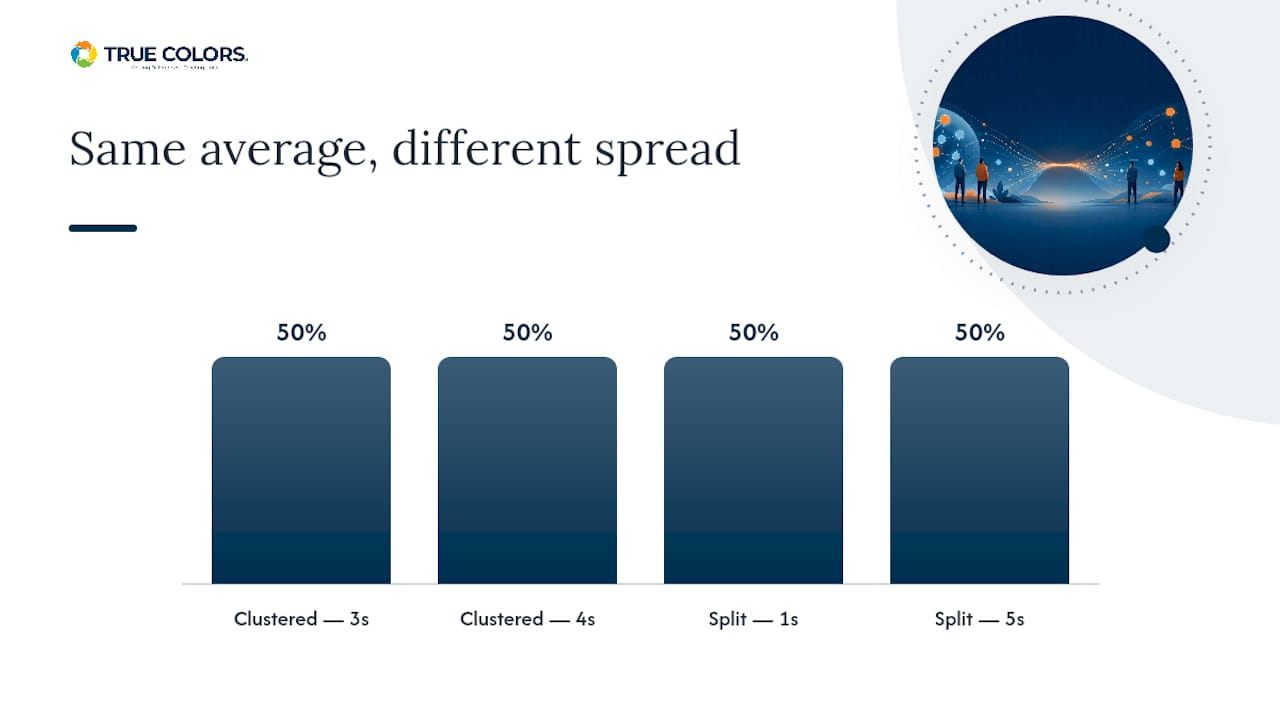
- Reveal and visualize the spread. Show the distribution of answers, not just the average. A dimension with a 3.5 average and everyone clustered near 3 to 4 is a very different problem than a 3.5 average built from a mix of 1s and 5s.
- Timebox discussion on the top two or three items. Pick the lowest scores or the widest spreads and give each one a fixed window, ten to fifteen minutes is plenty for most teams.
- Set one or two owned actions with due dates. Every action needs a name attached and a date on the calendar. No exceptions.
The non-negotiables worth repeating: anonymity, rating before discussion, and discussing spread rather than average are the three rules that separate a useful check from a theater exercise. Add a fourth: every action gets an owner and a due date, recorded somewhere the team will see again.
Pro Tip: If your team is remote or hybrid, use a digital whiteboard with anonymous sticky notes for the rating step, then switch to breakout rooms for the discussion of each top issue. It mimics the privacy of an in-person anonymous vote far better than a live poll where people can watch responses land.
Small teams of four or five need one adjustment: with that few respondents, anonymity gets thin fast. Consider aggregating scores across two cycles before discussing individual dimensions if the team is small enough that people can guess who said what.
Turning Scores Into a Plan: What the Spread Actually Tells You
The average score on any dimension tells you less than the spread. A team that averages 3.5 on psychological safety with everyone answering 3 or 4 has a moderate, shared problem. A team averaging the same 3.5 with half the group at 5 and half at 1 has something else entirely, likely a trust gap between subgroups, a manager who reads differently to different people, or a recent event that split opinion. The average hides the second problem completely.
Once you've identified the real issue, resist the instinct to fix everything at once. The most useful move is identifying the single weakest factor that's actually constraining performance and moving that one factor from weak to adequate before touching anything else. A team with strong delivery confidence but poor psychological safety should fix safety first, because safety issues tend to suppress honest reporting on every other dimension too.
Good action design follows a simple pattern:
- State the action specifically enough that success is obvious ("Reduce standing meetings from five to three per week" beats "improve workload").
- Name one owner, not a committee.
- Set a due date before the next health check cycle, not "ongoing."
Some teams track a simple follow-through index, the percentage of committed actions actually completed by the stated due date, as a signal of whether health checks are producing real change or just generating paperwork. A team with a strong follow-through rate will see its scores trend upward across cycles. A team where actions consistently slip past their due dates usually sees flat or declining scores no matter how good the intentions were in the room.
How Often Should You Run One, and What Should You Track?
Cadence depends on context, not calendar convenience. A stable, high-functioning team can check in quarterly and get plenty of signal. A team in active turnaround benefits from monthly checks while the fix is underway, and a team in genuine crisis mode can run brief weekly pulses temporarily, as long as everyone understands it's a short-term measure, not the new normal.
Track four numbers across cycles, not the raw scores alone:
- The mean score per dimension, watched over at least three cycles before drawing conclusions
- The spread (range) per dimension, which flags hidden disagreement an average would mask
- Response rate, since a drop signals fatigue or eroding trust in the process itself
- Action completion rate, the clearest proxy for whether the check changes anything
Run an extra check outside the normal schedule after a reorg, a new team lead, or a wave of joiners and leavers. These are exactly the moments when private views diverge fastest, and a check makes that divergence visible before it turns into attrition.
Why This Method Holds Up Under Scrutiny
Psychological safety consistently predicts team performance, which is why it anchors most credible dimension sets. Anonymous, rated statements produce data you can actually trend. True Colors International treats this kind of check as one input into a broader culture and behavior system, not a stand-alone fix. It doesn't replace a formal performance review, and it isn't a substitute for a company-wide HR engagement survey.
What Managers Get Wrong About Follow-Through
The biggest failure isn't a bad question set. It's skipping anonymity or letting actions go undone. Three quick fixes: restructure one recurring meeting, add a recognition ritual, and triage workload openly. Small, owned, and fast.
— Theresa
Turn Your Team Health Check Into Lasting Culture Change
A single health check tells you where things stand today. Organizations often need to turn a low psychological safety score or a workload warning sign into leadership habits that actually stick, instead of a chart nobody revisits next quarter.

Where a spreadsheet and a good facilitator can get a team through one cycle, sustained change usually needs something more structural, especially when a health check surfaces trust issues across multiple teams at once. True Colors International builds that structure through leadership development, team training, and connected leadership programs that translate diagnostic findings into repeatable behavior, not just a one-time conversation. If your health check results point to broader culture gaps across departments, our employee experience survey extends the same anonymous, dimension-based approach across the whole organization. Ready to see how a practical culture system could support your next cycle? Visit True Colors International to explore programs built for exactly this kind of follow-through.
Sources
- Team Health Check Guide: Questions & Cadence | TeamRetro
- Team Health Monitors for Building High-Performing Teams
- Team Health Check Template for Agile Teams | IdeaPlan