
Use 360 feedback for leaders as a development-first program, not a scorecard: collect input from managers, peers, and direct reports, enforce anonymity with minimum rater thresholds, and pair every report with a coached, SMART-goal action plan. The sections below give you the exact rater mix, question sets, rollout checklist, and pitfalls to avoid before you launch.
TL;DR:
- Using 360 feedback for leaders should focus on development through coaching and behavior change, not ranking or compensation decisions.
- Ensure a minimum of five responses per category and clear anonymity thresholds to obtain honest and useful feedback.
- Design questions around observable behaviors linked to leadership competencies and pair them with specific open-ended prompts for actionable insights.
- Conduct debriefs with trained facilitators and develop 90-day SMART action plans to foster sustained leadership growth.
- Most failures stem from linking feedback to pay or using too few raters, so focus on a structured follow-up process and meaningful development rather than collecting data alone.
Table of Contents
- What Is a Leader 360, and Does the Research Back It Up?
- How Do You Design a 360 That Leaders Trust?
- What Questions Should You Actually Ask?
- How Do You Roll Out a 360 Step by Step?
- What Mistakes Sink a 360 Program, and How Do You Avoid Them?
- How Does True Colors Turn 360 Data Into Real Leadership Change?
- Why Most 360 Programs Undersell What the Data Can Actually Do
- How True Colors Can Help You Run a 360 That Actually Changes Behavior
- Key Research and Templates to Consult
- Sources
- FAQ
What Is a Leader 360, and Does the Research Back It Up?
A 360 degree review for managers, often called multi-rater feedback, collects ratings and comments on a leader's behavior from several vantage points at once: a direct supervisor, a group of peers, direct reports, and sometimes internal clients or partners. The leader also rates themselves on the same items. The value comes from the contrast: how a leader sees their own communication style rarely matches how five direct reports experience it in a Monday status meeting.
SHRM frames 360 feedback as a powerful leadership development tool specifically when it stays separate from compensation and promotion decisions. That distinction shapes everything else in this article. The moment a 360 score touches a raise or a performance rating, raters start protecting colleagues instead of describing them honestly, and the data stops being useful for growth.
The evidence for structured, well-run programs is real but has conditions attached. Research on multi-rater feedback shows that properly administered 360 processes generate valid signals about leadership behavior only when minimum rater thresholds and true anonymity are enforced. Skip either one, and the "data" becomes closer to guesswork dressed up as a report.
What this means for leadership performance assessment in practice:
- Use 360s to build self-awareness and target coaching, never to rank leaders against each other.
- Treat the self-other gap, not the raw score, as the most useful data point.
- Anchor every competency measured to observable behavior, not personality or intent.
- Reserve punitive or compensation-linked uses for separate, standard performance reviews.
The research consensus is consistent: a leadership feedback process built for growth changes behavior, while one built for judgment mostly changes how carefully people word their comments.
How Do You Design a 360 That Leaders Trust?
Every design decision you make before launch either builds trust in the process or quietly undermines it. Get these four choices right, and the rest of the program takes care of itself.
1. State the purpose out loud, in writing, before you send a single invite. Tell leaders and raters explicitly that results feed coaching and development plans, not pay or promotion decisions. HBR's research on successful 360 reviews identifies a clearly declared purpose as one of the handful of conditions that separates programs people trust from programs people quietly sabotage.
2. Build a rater group that reflects how the leader actually works. A workable mix for a mid-level manager looks like this: one to two direct managers, four to six peers, and four to six direct reports. SHRM's manager effectiveness template uses a similar structure and adds internal or external clients where the role involves regular outside contact. The floor matters more than the ceiling: most practitioner guides, including 360review's template, recommend five to fifteen respondents total. Below that, individual comments become identifiable no matter how the report aggregates them, and anonymity collapses.
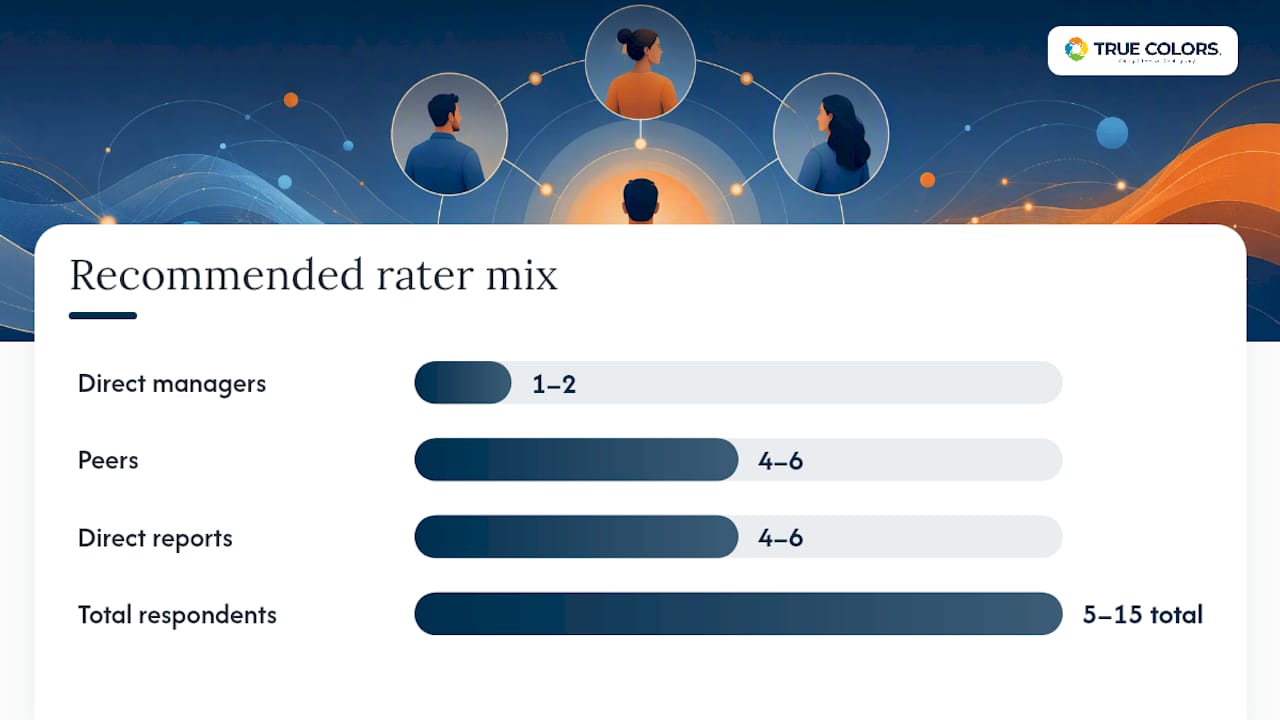
3. Set an anonymity threshold and stick to it. A common rule: any rater category with fewer than several respondents gets combined with others in the report to protect anonymity This one rule prevents a leader from reading three peer comments and knowing exactly which peer wrote which line.
4. Architect the questions in two layers. Start with a rating scale covering six to ten competencies (communication, delegation, strategic clarity, and so on), then add two or three open-ended prompts. 360review's data also points to a subtler design choice: an even-numbered rating scale, four or six points rather than five, reduces the tendency for raters to sit on a neutral middle option instead of committing to a real answer.
Pro Tip: If your organization has never run a 360 before, pilot it with your most self-aware, feedback-hungry leader first. A strong first experience becomes the internal case study that gets the next round of leaders to buy in instead of quietly dreading it.
On cadence, you have two real options. A full cycle, eight to fifteen rated items plus open comments, works well on an annual or biannual schedule tied to development planning. Micro-360s, three to five questions sent quarterly, work best as a pulse check after a major role change, a reorg, or a new team handoff, when you need a fast read without the overhead of a full process.
What Questions Should You Actually Ask?
The temptation is to ask about traits: is this leader "inspiring," "strategic," or "a good communicator." Skip that. Every item should describe an observable behavior, something a rater actually witnessed, because vague trait questions produce vague, unusable comments.
Here is a ten-item rating set mapped to core leadership competencies, built for a four or six-point behavioral scale (1 = rarely, 4 = consistently):
| Competency | Sample rating item |
|---|---|
| Emotional intelligence | Stays composed and constructive under pressure or conflict |
| Communication | Explains decisions clearly, including the reasoning behind them |
| Delegation | Assigns work that matches team members' skills and growth goals |
| Strategic clarity | Connects day-to-day priorities to broader team or company goals |
| Accountability | Follows through on commitments and owns mistakes openly |
| Feedback culture | Gives specific, timely feedback rather than vague praise or criticism |
| Listening | Seeks out dissenting views before finalizing a decision |
| Recognition | Acknowledges individual contributions in front of others |
| Change management | Helps the team adapt when priorities shift unexpectedly |
| Development focus | Invests time in coaching direct reports' long-term growth |
Pair the rating set with three open-ended prompts using the classic Start/Stop/Continue structure, which 360review's template also builds around:
- What should this leader start doing that they aren't doing now?
- What should this leader stop doing because it gets in the team's way?
- What should this leader keep doing because it genuinely works?
For senior executives, reweight the set toward strategic clarity, change management, and stakeholder influence, and consider adding a prompt about how the leader represents the organization's strategic brand authority externally. For frontline managers, weight toward delegation, recognition, and day-to-day feedback culture, since that is where the bulk of their leadership actually happens.
How Do You Roll Out a 360 Step by Step?
A credible leadership performance assessment lives or dies on execution, not survey design. Follow this sequence.
- Align stakeholders first. Get sign-off from HR leadership and the leader's manager on purpose, timeline, and how results will (and will not) be used before anyone sees a survey link.
- Communicate before you launch. Send a short explainer to both leaders and raters covering purpose, anonymity rules, and roughly how long it takes to complete. Ambiguity here is what breeds suspicion later.
- Train raters briefly. A ten-minute session or a short written guide on giving specific, behavior-based feedback measurably improves comment quality.
- Get explicit consent. Confirm every rater understands how their input will be aggregated and that individual responses won't be attributed.
- Choose your administrator. Internal HR administration is cheaper and faster to schedule, but external or third-party administration builds more trust for senior leaders and sensitive team dynamics, since raters know HR never sees who said what.
- Enforce the minimum response threshold. If a rater category falls short, extend the deadline or fold that category into a combined group rather than publishing a report built on two responses.
- Debrief with a trained facilitator, not an email attachment. A leader reading a self-other gap alone tends to either dismiss it or spiral. A facilitator who has read the aggregated data first can walk through the gap, name the pattern, and keep the conversation forward-looking.
- Build a 90-day SMART action plan from one to three priorities, not eight. HBR's research points to this step, pairing self-other gap discussion directly with a small number of specific commitments, as the difference between a 360 that changes behavior and one that just generates a PDF.
- Set coaching checkpoints. Thirty, sixty, and ninety-day check-ins on the action plan keep momentum from evaporating once the initial debrief excitement fades.
- Decide on the next cycle. Full 360s typically repeat annually or every two years; role changes or reorgs justify an earlier micro-360 pulse in between.
Pro Tip: Build the 90-day plan review into the leader's existing one-on-ones with their manager instead of creating a brand-new meeting. Action plans that live inside a routine survive; action plans that need a special calendar invite quietly die by week six.
What Mistakes Sink a 360 Program, and How Do You Avoid Them?
Most failed 360 programs fail for one of a handful of predictable reasons, and every one of them is preventable.
- Linking results to pay or promotion. This single decision, more than any other, turns honest raters into cautious ones and destroys the program's credibility within one cycle.
- Running with too few raters. Fewer than five respondents in a category makes anonymity impossible to protect, no matter how the report is formatted.
- Asking vague, trait-based questions. "Is a strong leader" produces nothing a coach can work with. "Follows through on commitments" does.
- Skipping the coached debrief. A report emailed without context gets read defensively, if it gets read carefully at all.
- Treating the 90-day plan as optional. A 360 without a follow-up plan is a snapshot, not a development tool.
Build a short readiness checklist before every launch: purpose confirmed in writing, rater list meets the minimum threshold, questions are behavior-based, a trained facilitator is booked for debriefs, and a manager is assigned to track the 90-day plan. Expect some emotional reaction to self-other gaps. That is normal, and it is exactly what a facilitator's job is designed to handle.
How Does True Colors Turn 360 Data Into Real Leadership Change?
A 360 report is a diagnosis, not a treatment. Truecolorsintl built its process around that distinction, moving from raw feedback to sustained behavior change through a defined sequence rather than a one-time event.
- Assessment: Multi-rater data collection built on clear purpose and enforced anonymity thresholds.
- Synthesis: Trained facilitators translate self-other gaps into a small number of concrete development priorities.
- Tailored curriculum: Findings feed directly into a leadership development curriculum built around the leader's actual gaps, not a generic course catalog.
- Coaching: Ongoing sessions keep the SMART plan alive past the initial debrief.
- Reinforcement: Follow-up touchpoints and manager check-ins keep new behaviors from fading once the novelty wears off.
Culture is not what is said. It's what is repeated. A 360 report only changes an organization when its findings show up again in coaching, in curriculum, and in the habits leaders practice long after the survey closes.
Organizations exploring this approach often start by reviewing how HR can structure leadership development governance before layering in assessment data. The pattern holds regardless of industry: feedback without a system around it fades within a quarter.
Why Most 360 Programs Undersell What the Data Can Actually Do
The conventional advice on 360 feedback for leaders spends most of its energy on the survey itself, the questions, the scale, the rater count, and treats the debrief and follow-up as an afterthought. That priority is backwards. The research is fairly consistent that the mechanics of a good survey are table stakes; the coached interpretation of the self-other gap and the discipline of a 90-day plan are what actually move behavior.
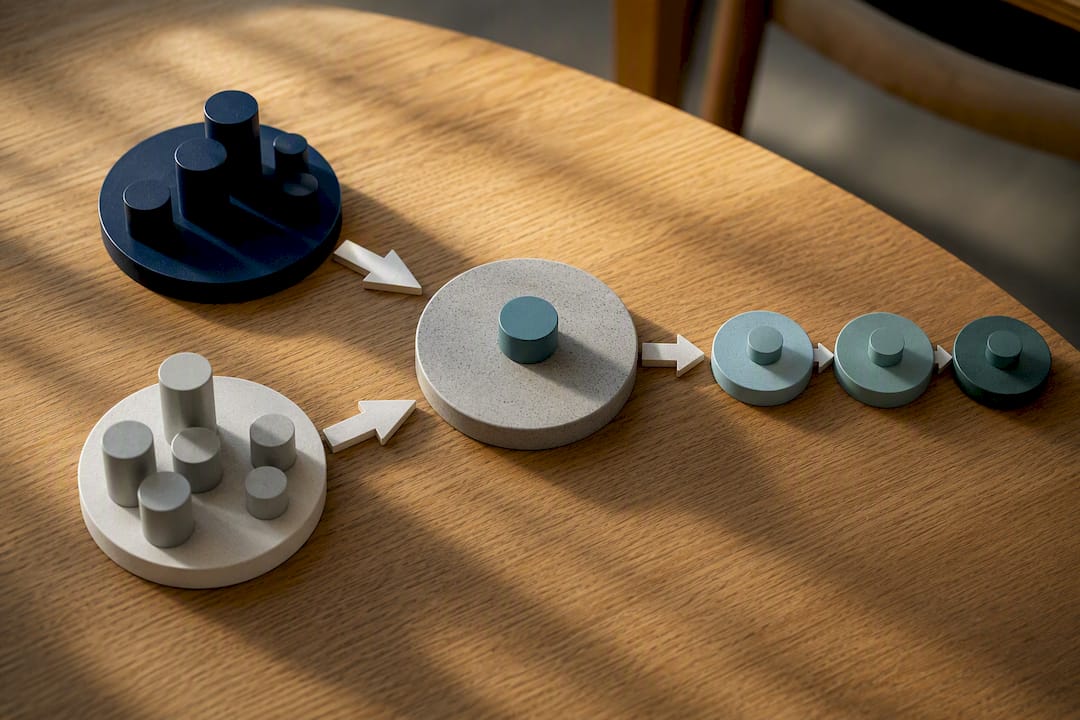
Here is what gets underestimated most: raters are more honest than HR teams expect, provided anonymity is real and the stated purpose holds up over time. The bigger risk isn't dishonest feedback. It's an organization that collects honest feedback and then does nothing structured with it. A leader who reads a hard self-other gap alone, without a facilitator and without a plan, usually either shuts down or rationalizes it away within a week.
If you take one thing from this article, prioritize the debrief and the action plan over the survey design. A slightly imperfect question set with a strong coached follow-up beats a flawless survey that ends in an unread email attachment. Culture change in leadership behavior is not a data collection problem. It's a follow-through problem, and that's where most programs, not just the survey, need the real investment.
— Theresa
How True Colors Can Help You Run a 360 That Actually Changes Behavior
If you've read this far, you already know the hard part of 360 feedback isn't the survey, it's what happens after the report lands. A specialized consulting firm exists for that exact gap: turning multi-rater data into a structured leadership development path instead of a one-time PDF nobody revisits.
Engagements typically start with a discovery conversation about current leadership challenges and how feedback is collected, then move into a pilot with a small group of leaders before scaling organization-wide. From there, assessment findings feed directly into the Connected Leadership Program, which pairs the data with tailored curriculum, coaching, and reinforcement over time rather than a single workshop. Engagements are structured as project-based consulting, scoped to organizational size and goals rather than sold as fixed off-the-shelf packages. If you're evaluating options for enterprise rollout, the corporate solutions page outlines how programs are typically scoped. The next step is simple: reach out through Truecolorsintl to schedule a discovery conversation about your leadership development goals.
Key Research and Templates to Consult
- SHRM's 360-degree manager effectiveness evaluation template for rater structure and competency lists.
- SHRM's article on 360 feedback as a development tool for purpose guidance.
- HBR's success factors for 360 reviews for design and debrief best practices.
- 360review's free 360 feedback template for ready-to-use rating items and prompts.
- Ennova's list of 360 leadership feedback questions for additional behavior-based item ideas.
Sources
- 360-Degree Manager Effectiveness Performance Evaluation (SHRM)
- What makes a 360-degree review successful (HBR)
- Free 360 Feedback Template for Managers (360review)
- Academic study on multi-rater feedback (PsycNet entry)
FAQ
What Are Good 360 Survey Questions for Leaders?
The strongest items describe observable behavior rather than traits, such as "explains decisions clearly, including the reasoning behind them" or "follows through on commitments and owns mistakes openly." Pair a rating set of eight to ten items like these with Start/Stop/Continue open-ended prompts for richer context.
What Do 360 Feedback Examples Actually Look Like?
A typical example combines rated items on competencies like delegation and accountability with written comments answering "what should this leader start, stop, or continue doing." The written comments usually carry more coaching value than the numeric scores.
What Are the 7 C's of Leadership?
Definitions of the "7 C's of leadership" vary by source and aren't a single standardized framework; most versions emphasize traits like character, communication, and commitment. Rather than teaching to an acronym, a development-focused 360 measures specific observable behaviors tied to your organization's actual leadership expectations.
Can You Give an Example of Leadership Feedback?
Effective leadership feedback names a specific behavior and its impact, for example: "In team meetings, you tend to jump to solutions before hearing everyone's input, which makes some team members stop offering ideas." That specificity is exactly what a well-designed 360, followed by a coached debrief through a program like Truecolorsintl's Connected Leadership Program, is built to surface.