
A communication training program is defined as a structured, practice-based initiative that teaches employees specific, measurable communication skills to improve workplace performance. Unlike broad soft-skills workshops, these programs target observable behaviors: active listening, feedback delivery, conflict resolution, and written clarity. Communication training programs can yield over 250% ROI within 9 months by increasing employee productivity by up to 12%. That return makes communication skills training one of the highest-leverage investments a manager can make. For team leaders responsible for collaboration and output, understanding what a communication training program delivers is the starting point for building a stronger team.
What is a communication training program and what skills does it build?
A communication training program, also called a workplace communication development program in organizational learning contexts, is a structured curriculum that builds specific, job-relevant communication behaviors. It differs from a general leadership seminar because it targets discrete skills that teams can practice, measure, and improve over time.
Effective communication training develops six core skill areas:
-
Active listening. The highest-leverage skill in any team context. It means reflecting, clarifying, and responding to what was said, not what you expected to hear.
-
Verbal communication. Covers assertiveness, clarity, and pacing. Teams learn to say what they mean without ambiguity or over-qualification.
-
Nonverbal awareness. Body language, eye contact, and posture send signals before a word is spoken. These behaviors are trainable.
-
Constructive feedback. The Situation-Behavior-Impact (SBI) model is a widely used framework. It separates observation from judgment and makes feedback easier to receive.
-
Conflict management. Teams learn to address disagreements directly and productively, rather than avoiding them until they escalate.
-
Written communication and meeting participation. Clear emails, structured agendas, and concise updates reduce rework and confusion.
High-impact programs also integrate emotional intelligence and cross-cultural competence, which are critical for leaders managing diverse teams. These components move training beyond etiquette into the territory of real leadership behavior.
Pro Tip: Start with active listening before any other skill. Teams that listen better argue less, align faster, and produce fewer errors. It is the foundation every other communication skill builds on.
How does communication training impact productivity and team results?
The business case for communication skills training is well documented. Poor communication costs a 20-person company with a $60,000 average salary more than $120,000 annually from lost productivity. That figure represents roughly 2 hours lost per employee per week to miscommunication, rework, and unclear direction.
| Impact Area | What the Research Shows |
|---|---|
| Productivity gain | Up to 12% increase after structured training |
| ROI timeline | Over 250% ROI achievable within 9 months |
| Annual cost of poor communication | $120,000+ for a 20-person team |
| Weekly time lost per employee | Approximately 2 hours from miscommunication |
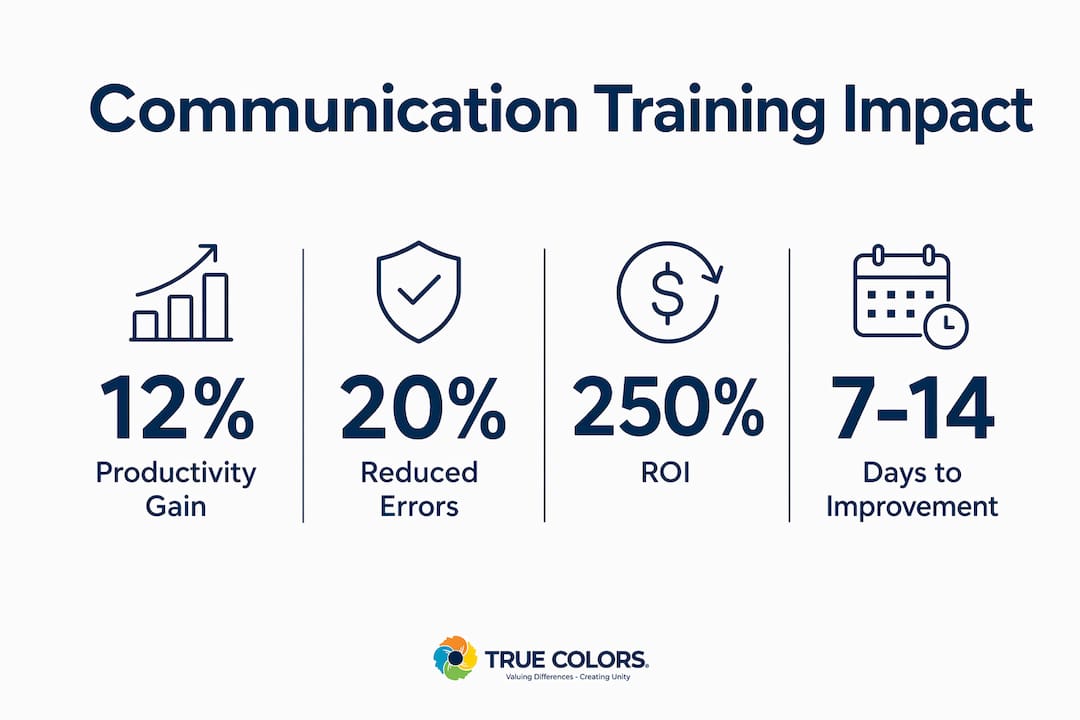
Small teams bear this cost disproportionately. Fewer people absorb each error, so a single miscommunication ripples further and faster than it would in a larger organization. Training investment pays back quickly in these environments.
The cultural benefits are equally significant. Continuous communication training strengthens leadership effectiveness, team collaboration, and employee engagement, building a culture of openness. That openness reduces the hesitation that slows decisions and the silence that hides problems.
Communication training is not a soft investment. It is a direct intervention in the operating efficiency of your team. Every dollar spent on reducing miscommunication is a dollar saved on rework, delays, and turnover.
The link between communication and leadership effectiveness is direct. Managers who communicate with clarity and consistency set the behavioral standard for their entire team. When leaders model the skills they expect, the culture shifts.
What training methods make communication programs effective?
The most effective corporate communication training programs are built on Behavioral Skills Training (BST). BST reshapes behavior through repeated cycles of explanation, modeling, rehearsal, and feedback. Each cycle builds on the last, creating durable habits rather than one-time awareness.
The four-step BST cycle works as follows:
-
Instruction. The trainer explains the target skill clearly, including what it looks like in practice and why it matters.
-
Modeling. Participants observe the skill being demonstrated correctly, often through video or live role-play.
-
Rehearsal. Participants practice the skill in a realistic scenario. This is where most lecture-based programs fail: they skip this step entirely.
-
Feedback. Immediate, specific feedback follows each rehearsal. Participants learn what worked and what to adjust before the pattern sets.
Practice-based programs consistently outperform lecture formats because behavior change requires repetition, not just information. Knowing what good communication looks like does not make you better at it. Practicing it does.
Timelines for improvement are realistic and measurable. Body language improvements appear within 7–14 days of consistent practice. Verbal skills, which require more cognitive rewiring, typically show observable change within 2–4 weeks. These timelines give managers concrete milestones to track.

Modern effective communication programs also include executive presence, emotional intelligence, and cross-cultural communication. For leaders managing global or multicultural teams, cross-cultural communication skills are not optional additions. They are core competencies that affect trust, clarity, and team cohesion.
Pro Tip: Replace at least one standing meeting per month with a structured communication practice session. Use a real scenario from your team’s recent work. The closer the practice is to actual job conditions, the faster the skill transfers.
How can managers implement and sustain communication training?
Implementing a communication training program requires more than booking a workshop. The most common failure point is the “transfer gap.” Skills fade within 3–6 months without ongoing reinforcement. A single session creates awareness. Sustained practice creates change.
Managers who build lasting communication habits in their teams follow a consistent pattern:
-
Diagnose before designing. Identify the specific gaps hurting your team. Is it unclear feedback? Avoidance of conflict? Poor meeting discipline? Target the real problem, not a generic curriculum.
-
Combine formal training with daily practice. Use workshops to introduce skills, then reinforce them in 1:1s, team meetings, and project debriefs. The team communication system that works best is one embedded in how the team already operates.
-
Measure progress explicitly. Track observable behaviors, not self-reported confidence. Did feedback conversations increase? Did meeting outcomes improve? Concrete metrics keep training accountable.
-
Address resistance to role-play directly. Many participants resist practice exercises because they feel exposed. Frame role-play as skill rehearsal, not performance evaluation. Psychological safety makes the difference.
-
Build feedback cycles into the workflow. Weekly check-ins, peer feedback rounds, and structured retrospectives keep communication skills active between formal training events.
-
Use frameworks to reduce complexity. Tools like the SBI feedback model or leadership communication guides give teams a shared language. Shared language reduces friction and speeds alignment.
Ongoing training is not a luxury for teams that want to stay effective. Communication norms shift as teams grow, roles change, and business demands evolve. The organizations that sustain strong communication are the ones that treat it as a repeating practice, not a one-time fix.
Key Takeaways
A communication training program delivers measurable productivity gains only when it combines structured skill instruction with consistent, practice-based reinforcement embedded in daily team workflows.
| Point | Details |
|---|---|
| Core skills targeted | Programs build active listening, feedback delivery, conflict resolution, and written clarity. |
| Productivity and ROI | Structured training can increase productivity by 12% and return over 250% ROI within 9 months. |
| BST cycle is the gold standard | Explanation, modeling, rehearsal, and feedback produce durable behavior change. |
| Skills fade without reinforcement | Without ongoing practice, gains disappear within 3–6 months of initial training. |
| Managers drive sustainability | Embedding communication practice into 1:1s and team meetings keeps skills active and growing. |
Why communication training is a leadership responsibility, not an HR checkbox
I have worked with enough leadership teams to know the pattern. A manager notices friction on the team, books a communication workshop, and considers the problem handled. Six months later, the same friction is back. Nothing changed because nothing was reinforced.
Communication training is not a one-time event. It is a leadership behavior. The managers who see lasting results are the ones who model the skills themselves, reference the frameworks in real conversations, and create space for practice in their regular team rhythms. Culture is not what is said. It is what is repeated.
The other thing I have seen consistently is that managers underestimate how much their own communication style sets the ceiling for their team. If a leader avoids direct feedback, the team avoids it too. If a leader listens poorly in meetings, the team mirrors that. Leadership communication style is not just a personal preference. It is a structural force in how the team operates.
The importance of communication skills becomes most visible when something goes wrong. A missed deadline, a misread priority, a conflict that should have been a conversation. Those moments are not random. They are the predictable output of a team that has not built strong communication habits. Training gives you the tools. Consistency gives you the results.
— Theresa Stairs
How Truecolorsintl supports communication and leadership development
Truecolorsintl helps organizations move beyond awareness into consistent, observable behavior change. The work is grounded in human behavior science and designed to make culture practical, not aspirational.

For managers and team leaders ready to build stronger communication habits, the Connected Leadership Program provides a structured path from individual communication awareness to aligned team behavior. The program integrates the skills covered in this article, including feedback delivery, conflict navigation, and cross-cultural communication, into a leadership development system that reinforces over time. Truecolorsintl also offers advanced certifications for leaders who want to deepen their expertise and bring these frameworks directly into their teams. Explore the full range of programs at Truecolorsintl.
FAQ
What is a communication training program?
A communication training program is a structured, practice-based curriculum that teaches specific workplace communication skills, including active listening, feedback delivery, conflict resolution, and written clarity. It differs from general soft-skills training by targeting observable, measurable behaviors.
How long does it take to see results from communication training?
Body language improvements appear within 7–14 days of consistent practice, while verbal communication skills typically show observable change within 2–4 weeks. Sustained results require ongoing reinforcement beyond the initial training period.
What is the ROI of communication skills training?
Structured communication training programs can yield over 250% ROI within 9 months by increasing employee productivity by up to 12%. Poor communication costs a 20-person team more than $120,000 annually, making training a high-return investment.
What should managers look for in an effective communication program?
The most effective programs use the Behavioral Skills Training cycle: instruction, modeling, rehearsal, and immediate feedback. Programs that rely on lectures without practice exercises produce awareness but not lasting behavior change.
How do you sustain communication skills after training ends?
Skills fade within 3–6 months without reinforcement. Managers sustain gains by embedding communication practice into existing team routines, such as 1:1s, retrospectives, and structured feedback cycles, rather than treating training as a standalone event.