
Culture is the single most underestimated determinant of merger and acquisition outcomes. The role of culture in M&A success is not a soft concern reserved for HR teams. It sits at the center of every integration decision, from how quickly teams collaborate to whether top talent stays after the deal closes. Approximately 70% of M&A deals fail to achieve their anticipated value, and two-thirds of those failures trace back to mismanaging people and culture. Executives who treat cultural alignment as a financial afterthought pay for that choice in lost synergies, attrition, and damaged brand reputation.
What is the role of culture in M&A success?
Organizational culture is defined as the shared values, behavioral norms, and communication patterns that shape how people work together. In an M&A context, culture determines whether two organizations can function as one. Financial models can project synergies, but culture is what either enables or blocks those synergies from materializing.
A 2026 study of 1,499 cross-border M&A events found that strong corporate culture significantly improves both short- and long-term performance, particularly when organizations prioritize innovation, quality, and teamwork. That finding matters because it confirms culture is not just a morale issue. It is a performance driver with measurable financial consequences.

The importance of culture in M&A also shows up in talent retention. When employees cannot identify with the combined organization’s values, they leave. When they leave, institutional knowledge walks out with them, and integration timelines extend. Culture, handled well, keeps people engaged and productive through the disruption of a deal.
How does organizational culture impact M&A outcomes?
Culture’s influence on acquisition outcomes operates across four interconnected dimensions: collaboration, innovation, retention, and brand unity.
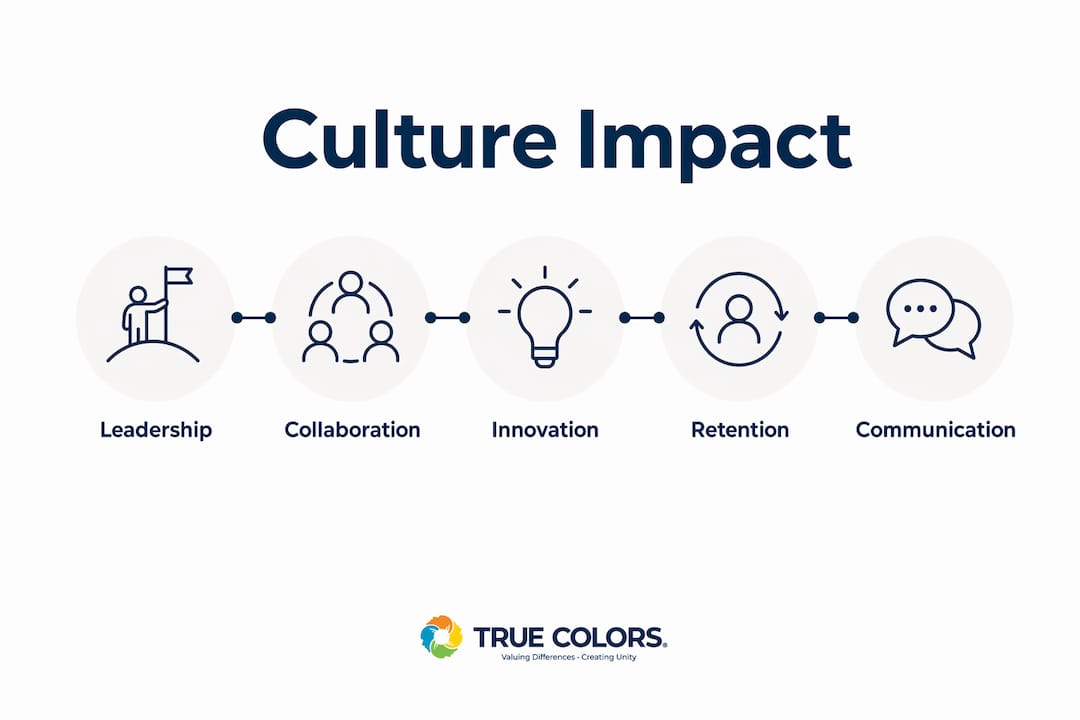
Effective cultural integration enables collaboration, drives innovation, improves retention, and creates brand unity that significantly enhances transaction value. Each of these outcomes depends on alignment between the two organizations’ behavioral norms, not just their org charts.
Here is how each dimension plays out in practice:
-
Collaboration: Teams from different organizations carry different assumptions about decision-making authority, meeting norms, and communication styles. Without deliberate alignment, those differences create friction that slows execution.
-
Innovation: A 2026 cross-border M&A study identified innovation as one of the top cultural values linked to improved post-deal performance. Organizations that share a commitment to experimentation integrate faster and generate new ideas sooner.
-
Retention: Employees who feel their identity and values are respected stay. Those who feel overwritten by a dominant culture look for exits, often within the first 12 months post-close.
-
Brand unity: Customers and partners notice cultural dissonance. Inconsistent service experiences, conflicting messaging, and internal confusion all erode the brand equity that made the acquisition attractive in the first place.
Culture is not what is said during the announcement. It is what is repeated in every meeting, decision, and interaction after the deal closes. Organizations that understand this truth treat cultural integration as an operational priority, not a communications exercise.
The impact of culture on merger success also scales with leadership experience. The same 2026 study found the performance benefits of strong culture are amplified when experienced leaders are at the helm. That means leadership capability and cultural awareness are not separate investments. They are the same investment.
What are the most common M&A cultural challenges?
Cultural integration in mergers fails in predictable ways. Recognizing these patterns before they take hold is the first line of defense for any executive leading a deal.
-
Clashing leadership styles. Two organizations rarely share identical assumptions about authority, accountability, or how decisions get made. When those differences collide at the leadership level, they cascade through every layer of the combined organization.
-
Identity threats and employee resistance. Identity threats lead to active resistance when employees feel their culture is being erased rather than respected. The instinct to protect one’s professional identity is strong, and it surfaces as disengagement, quiet quitting, or outright departure.
-
Communication gaps and uncertainty. Ambiguity about roles, reporting structures, and the future direction of the combined organization creates anxiety. Anxiety reduces productivity and accelerates turnover.
-
The standardization misconception. Standardizing culture during integration is a persistent and damaging misconception. Forcing one culture onto another does not create alignment. It creates resentment. Persistent differences in leadership style and power structures often remain long after integration plans declare victory.
-
Late involvement of HR and organizational development. The dealmaker mentality prioritizes financial modeling over human factors. When HR and organizational development professionals are brought in after the deal is signed, cultural problems are already forming.
Pro Tip: Map the cultural gap between both organizations before due diligence closes. A structured cultural assessment at the pre-close stage gives leadership a concrete picture of where friction will emerge, not a vague sense that “cultures are different.”
The M&A cultural challenges that sink deals are rarely surprises in hindsight. They are the predictable result of treating culture as a post-close problem rather than a pre-close priority.
What strategies drive effective cultural integration in M&A?
The strategies that work share one characteristic: they treat culture as a workstream with the same rigor applied to legal, financial, and operational integration.
Conduct cultural due diligence early
Cultural alignment is arguably more critical than financial due diligence because culture predicts long-term sustainability in ways that metrics cannot. Vetting cultural fit should begin at the same stage as financial modeling, not after term sheets are signed.
Involve HR and organizational development from the start
HR and organizational development must be involved early for cultural integration to succeed. These functions bring the tools and frameworks needed to assess behavioral norms, identify misalignment risks, and design integration plans that account for human behavior.
Build a unified vision that respects both cultures
The goal is not to eliminate one culture and replace it with another. The goal is to build a new shared identity that draws from the strengths of both organizations. This requires deliberate design, not default dominance by the acquiring company.
Here is a practical framework for cultural alignment in M&A:
| Integration stage | Cultural action |
|---|---|
| Pre-close due diligence | Conduct structured cultural assessments for both organizations |
| Deal announcement | Communicate the “why” behind the merger and what will stay the same |
| First 90 days post-close | Launch cross-functional teams to build shared norms and working agreements |
| 6-month review | Measure cultural integration progress with employee feedback and engagement data |
| 12-month reinforcement | Embed aligned behaviors into performance management and leadership development |
-
Use open dialogue and employee participation through workshops and cross-functional teams to build trust and shared understanding.
-
Create clear communication channels that address uncertainty directly and consistently.
-
Align cultural integration goals with business strategy so that culture work connects to measurable outcomes. Truecolorsintl’s approach to aligning culture with business strategy provides a practical model for this connection.
Pro Tip: Measure cultural integration the same way you measure financial integration. Define 3–5 behavioral indicators of alignment, track them at 30, 60, and 90 days post-close, and report them to the executive team alongside operational metrics.
How can executives lead cultural alignment to drive M&A success?
Leadership behavior is the most visible signal of cultural direction in any organization. During an M&A, that signal is amplified because employees are watching closely for cues about what the new organization values.
Executives who lead cultural alignment effectively do the following:
-
Communicate the “why” early and often. Communicating the rationale behind the merger and creating a new shared identity reduces resistance and builds buy-in. Employees who understand the purpose of a deal are more likely to commit to its success.
-
Model the behaviors they expect. Culture is not what is announced. It is what is repeated. When executives demonstrate the values of the combined organization in their own decisions and interactions, those behaviors spread.
-
Embed culture into change management plans. Cultural integration cannot run as a parallel track to operational integration. It must be woven into every change management communication, training program, and leadership decision.
-
Retain talent through cultural respect. Experienced M&A leaders prioritize cultural alignment over financials because they know that losing key people after a deal closes destroys the value the deal was meant to create.
-
Use structured tools to make culture observable. Truecolorsintl helps organizations make culture visible and measurable through behavior-based frameworks that give leaders a common language for alignment. Understanding how misaligned culture costs organizations is the first step toward preventing those costs in an M&A context.
Culture’s influence on acquisition outcomes is ultimately a leadership responsibility. The organizations that get this right do not leave cultural alignment to chance. They assign it ownership, resources, and accountability at the executive level.
Key Takeaways
Cultural integration in mergers succeeds when executives treat culture as a performance variable, not a people problem, and build alignment from the first stage of due diligence through 12 months post-close.
| Point | Details |
|---|---|
| Culture drives deal failure | Two-thirds of failed M&A deals trace back to mismanaging culture and people. |
| Early assessment is non-negotiable | Cultural due diligence must begin at the same stage as financial modeling. |
| Standardization backfires | Forcing one culture onto another creates resistance; build a new shared identity instead. |
| Leadership behavior sets direction | Executives who model aligned behaviors accelerate integration across every level. |
| Measurement sustains progress | Track behavioral indicators of cultural alignment at 30, 60, and 90 days post-close. |
Culture in M&A: What the data keeps telling us that dealmakers keep ignoring
After working with organizations through leadership transitions and culture change, one pattern stands out in M&A more than any other. The executives who struggle most with integration are not the ones who lacked financial sophistication. They are the leaders who believed culture would sort itself out once the operational structure was in place.
It does not sort itself out. Culture is not a byproduct of structure. It is the operating system that determines whether structure functions at all.
What I find most striking about the 2026 research on cross-border M&A is not the finding itself, which confirms what experienced practitioners have observed for years. It is that the finding still needs to be published and cited to get attention in boardrooms. The persistence of culture-related deal failures is not a knowledge problem. It is a prioritization problem.
The shift I see in the most effective M&A leaders is a willingness to treat cultural expertise as a deal competency, not a support function. They bring culture and organizational development professionals into the room at the same time as the lawyers and the financial advisors. They ask cultural questions during target evaluation, not during onboarding.
My advice to any executive preparing for a deal: do not wait for the announcement to start the cultural work. The moment you identify a target, start mapping the behavioral gap. The organizations that do this consistently are the ones that close deals and realize the value they projected.
— Theresa Stairs
How Truecolorsintl supports cultural integration in M&A
Organizations that treat culture as a core M&A workstream need more than good intentions. They need practical tools, structured frameworks, and leadership development that makes cultural alignment observable and repeatable.

Truecolorsintl helps executive teams and HR leaders build the behavioral foundations that make integration work. From leadership development programs that align teams around shared values to corporate consulting solutions that support culture change at scale, Truecolorsintl gives organizations the systems they need to move from cultural assessment to aligned action. The work does not stop at the announcement. It continues through every stage of integration, reinforcing the behaviors that determine whether a deal delivers on its promise.
FAQ
Why does culture cause so many M&A deals to fail?
Two-thirds of M&A failures are linked to mismanaging people and culture. Deals fail when cultural differences are ignored during due diligence and left unmanaged during integration.
When should cultural due diligence begin in an M&A deal?
Cultural due diligence should begin at the same stage as financial due diligence, before term sheets are signed. Waiting until post-close means cultural problems are already forming before integration plans are in place.
What is the biggest mistake executives make in cultural integration?
The most common mistake is attempting to standardize culture by imposing the acquiring company’s norms on the acquired organization. Standardized integrations fail because cultural identity and social norms shape employee behavior in ways that cannot be overwritten by policy.
How does culture affect talent retention after a merger?
Employees who feel their identity and values are not respected in the combined organization leave, typically within the first 12 months post-close. Retaining talent requires building a new shared identity that draws from both organizations’ strengths.
How can executives measure cultural integration progress?
Define 3–5 behavioral indicators of alignment and track them at regular intervals post-close. Employee engagement data and feedback mechanisms provide concrete signals of whether cultural integration is progressing or stalling.