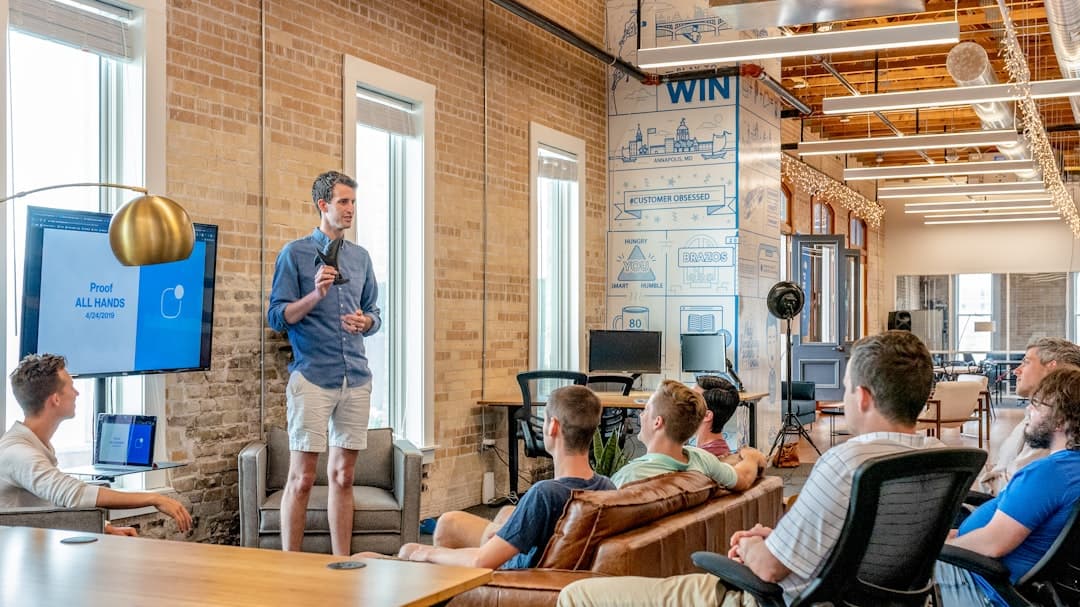
A learning culture at work is defined as an organizational environment where continuous development is embedded into daily operations rather than treated as a separate, periodic event. Unlike a one-time training program, a true learning culture shapes how people think, collaborate, and solve problems every day. It operates at three levels: individual initiative, manager support, and visible leadership commitment. Organizations that build this kind of environment see measurable gains in engagement, retention, and performance. Tools like LMS platforms, peer mentorship programs, and blended learning formats are the infrastructure. The mindset is the foundation.
What is learning culture at work vs. traditional training?
A learning culture is not a training calendar. Traditional workplace training treats development as a discrete event: attend a session, complete a module, check a box. A genuine learning culture treats development as a continuous practice woven into the work itself.
The distinction matters because isolated training rarely changes behavior. Employees attend a workshop, return to their desks, and face the same pressures with no reinforcement. A workplace learning environment, by contrast, makes growth part of the daily rhythm. Modern workplace learning integrates development “in the flow of work” using formal and informal methods to minimize disruption to daily tasks. That means on-demand videos, peer coaching, and real-time feedback replace the quarterly all-hands training session.
Several characteristics separate a learning culture from conventional training programs:
-
Psychological safety: Employees experiment, make mistakes, and share what they learned without fear of judgment.
-
Informal learning: Hallway conversations, Slack channels, and lunch-and-learns count as development.
-
Feedback as a norm: Managers give and receive feedback regularly, not only during annual reviews.
-
Learner ownership: Employees identify their own skill gaps and pursue solutions proactively.
-
Integration with work: Learning solves real problems rather than preparing for hypothetical ones.
Learning culture drives innovation by encouraging experimentation without fear of failure and making feedback a standard practice. That mindset creates shared motivation across the organization, which no compliance module can replicate.
Pro Tip: Avoid building a library of courses and calling it a learning culture. If employees cannot connect a learning resource to a problem they faced this week, the resource will go unused. Start with the friction in their work, then build the learning around it.

Who is responsible for building a learning culture?
A learning culture does not emerge from a single department. It requires aligned commitment from leaders, managers, and employees simultaneously.
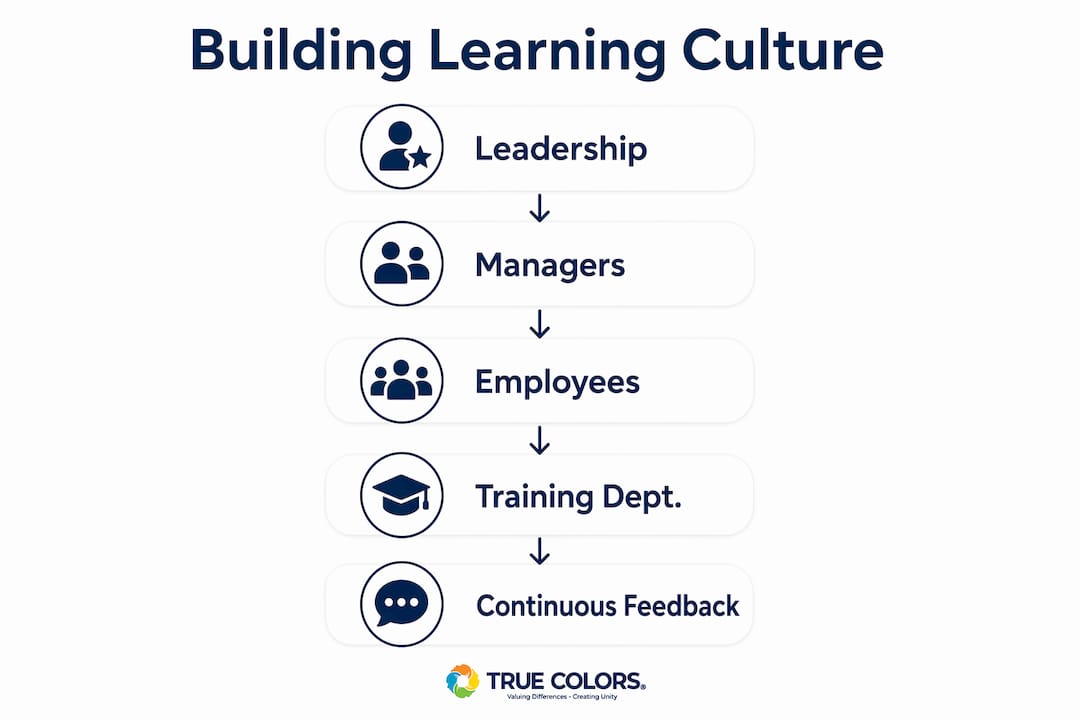
Leadership sets the tone. When executives publicly share what they are learning, admit knowledge gaps, and allocate budget for development, they signal that growth is a priority. When they do not, no amount of HR programming compensates. A sustainable learning culture demands committed leadership, empowered managers protecting development time, and proactive learners taking ownership. Leadership behavior is the most visible signal in any organization.
Managers are the critical middle layer. They control whether employees have time, projects, and psychological permission to develop. A manager who cancels one-on-ones to hit short-term targets sends a clear message about what the organization actually values. Effective managers do the opposite:
-
Protect dedicated learning time in weekly schedules, even 30 minutes per week.
-
Assign stretch projects that require employees to build new skills on the job.
-
Debrief after projects to extract lessons and share them with the broader team.
-
Connect skill-building directly to reducing daily work frustrations, not abstract career goals.
-
Model their own learning by sharing articles, attending sessions, and asking questions openly.
Employees complete the system. A learning culture requires individuals to take ownership of their own growth. That means identifying skill gaps, seeking feedback without waiting for a performance review, and sharing knowledge with peers. Employees tend to resist learning initiatives they see as secondary obligations. Managers who link skill-building directly to reducing daily frustrations increase participation significantly. That connection between learning and immediate work relief is what converts skeptics.
Training departments must reposition as strategic partners delivering targeted, work-relevant learning that drives performance rather than just compliance. This shift is what separates organizations that sustain a learning culture from those that cycle through initiatives without lasting change. Truecolorsintl works with organizations to align leadership behavior with culture goals, which is where this kind of shift becomes real and measurable. You can explore how strategic culture change connects leadership behavior to lasting organizational habits.
Pro Tip: If your training team spends more time building course catalogs than talking to managers about current performance gaps, reorient the work. The best learning programs start with a business problem, not a content plan.
What are the real benefits of a learning culture?
The benefits of learning culture extend beyond individual skill development. They compound across teams and show up in business outcomes that matter to executives and employees alike.
Learning cultures emphasize knowledge exchanges between peers rather than sheer content volume for effective learning. Frequent, quality peer interactions build deeper engagement than large course catalogs ever will. That insight reframes the ROI conversation: the value is in the exchange, not the inventory.
| Benefit | What It Looks Like in Practice |
|---|---|
| Higher employee engagement | Employees report feeling valued when development is part of their role, not an add-on |
| Stronger retention | Teams with active learning cultures experience lower voluntary turnover |
| Faster innovation | Psychological safety allows teams to test ideas and share failures without penalty |
| Better collaboration | Peer learning builds cross-functional relationships and shared vocabulary |
| Greater adaptability | Employees upskill faster when learning is already embedded in daily work |
“More content does not equal more learning. Quality peer exchanges matter most.” — Ingenuiti
The importance of continuous learning becomes especially clear during periods of organizational change. Companies that have already normalized learning adapt faster because their people are not starting from zero. They have the habits, the relationships, and the psychological safety to absorb new information and adjust quickly.
How to foster learning at work: practical strategies that hold
Creating a learning organization is not a single initiative. It is a set of repeating behaviors that become the norm over time. Culture is not what is said. It is what is repeated.
Embed learning into existing workflows. The most effective method is not adding new programs. It is attaching learning to work that already happens. Post-project debriefs, peer reviews, and brief knowledge-sharing moments in team meetings all count. Learning fatigue is common when organizations rely heavily on mandatory digital content without integrating learning into work. Engagement rises when learning happens just in time while solving actual work problems.
Invest in peer influencers, not just formal programs. Internal influencers, meaning peer experts who voluntarily share knowledge, are key drivers of sustainable learning cultures. Successful companies invest in peer-to-peer communities more than formal course design. Identify the people in your organization who others naturally turn to for advice. Give them time, visibility, and a platform. They will do more for your learning culture than any LMS rollout. You can read more about building peer learning communities in practice.
Create psychological safety deliberately. Safety does not appear because a leader announces it. It appears when leaders respond to mistakes with curiosity instead of blame, when managers share their own failures in team meetings, and when employees see that speaking up leads to better outcomes rather than career risk. This behavior must be consistent and visible.
Measure what matters and celebrate it. Track participation in peer learning events, the number of internal knowledge-sharing sessions, and employee-reported confidence in new skills. Celebrate learning milestones publicly, not just performance outcomes. When an employee shares a lesson from a failed project in a team meeting, recognize that behavior explicitly. What gets recognized gets repeated.
Use the right tools without over-relying on them. Platforms like LinkedIn Learning, Coursera for Business, and internal wikis support a learning culture. They do not create one. Tools work when the culture already values learning. Without that foundation, even the best LMS becomes shelfware.
Key takeaways
A learning culture at work requires consistent leadership behavior, manager-protected development time, and employee ownership of growth to produce lasting results.
| Point | Details |
|---|---|
| Culture vs. training | A learning culture is continuous and embedded in work; traditional training is isolated and episodic. |
| Leadership behavior | Leaders who visibly model learning set the standard that managers and employees follow. |
| Peer learning drives engagement | Quality knowledge exchanges between peers outperform large course catalogs for sustained development. |
| Avoid learning fatigue | Integrate learning into real work problems rather than adding mandatory digital content. |
| Measure and recognize | Track peer learning activity and celebrate knowledge-sharing behaviors to reinforce the culture. |
What i’ve learned about learning cultures that last
After working with organizations across industries, the pattern is consistent: the companies that build lasting learning cultures are not the ones with the biggest training budgets. They are the ones where managers talk about learning in the same breath as performance.
The most common mistake I see is confusing activity with culture. An organization launches a learning platform, promotes it in an all-hands meeting, and then measures success by license utilization. Six months later, engagement drops and leadership wonders what went wrong. The platform was never the problem. The absence of reinforcing behavior was.
What actually works is less glamorous. It is a manager who opens a team meeting by sharing one thing they got wrong last week and what they learned from it. It is a peer expert who runs a 20-minute lunch session on a tool that saved them three hours. It is a leader who asks “what did we learn?” after every major project, not just “what did we deliver?”
The employee experience dimension is also underestimated. Employees who feel their development is genuinely supported by their organization report higher trust, stronger team relationships, and greater willingness to take on new challenges. That is not a soft outcome. It shows up in retention data and team performance.
The organizations that get this right treat learning as a leadership behavior, not an HR program. That reframe changes everything.
— Theresa
How Truecolorsintl helps organizations build learning cultures
Building a learning culture requires more than good intentions. It requires a system that connects leadership behavior, team dynamics, and individual development into a coherent whole.
Truecolorsintl helps organizations make culture observable and repeatable. Through leadership development and culture programs, Truecolorsintl works with leaders and teams to identify the behaviors that support or undermine a learning environment, then builds the habits that sustain progress. The Connected Leadership Program is specifically designed to develop leaders who champion learning as a daily practice, not a quarterly initiative. If your organization is ready to move from isolated training events to a culture where growth is the norm, Truecolorsintl offers the tools and the framework to get there.
FAQ
What is a learning culture at work?
A learning culture at work is an organizational environment where continuous development is integrated into daily work rather than treated as a separate event. It is defined by leadership modeling, manager support, psychological safety, and employee ownership of growth.
How does a learning culture differ from employee training?
Employee training is a discrete event with a defined start and end. A learning culture is ongoing, informal, and embedded in how work gets done every day, including peer exchanges, feedback loops, and on-the-job experimentation.
What promotes learning in the workplace most effectively?
Peer knowledge exchanges and just-in-time learning tied to real work problems drive the strongest engagement. Mandatory digital content without workflow integration is the least effective approach.
What role do managers play in a learning culture?
Managers protect development time, assign stretch projects, and connect skill-building to daily work challenges. Their behavior signals whether learning is genuinely valued or just a stated priority.
How do you measure a learning culture?
Track peer learning participation, internal knowledge-sharing frequency, and employee-reported skill confidence. Recognize learning behaviors publicly to reinforce the habits that sustain the culture over time.